
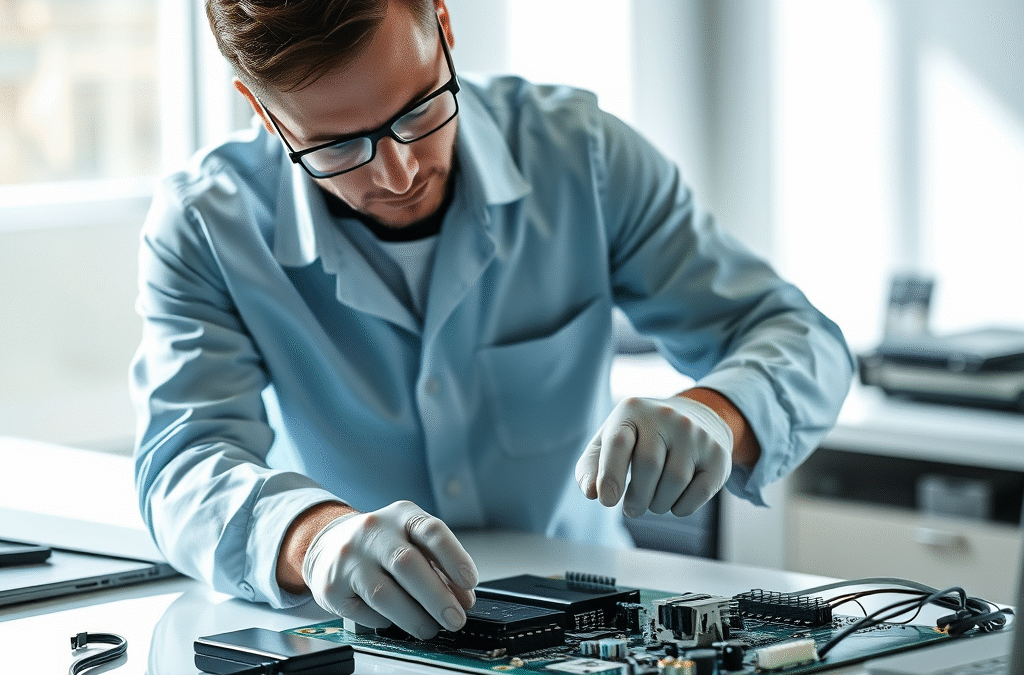
# BestElectronics Manufacturing services companies (EMS)
These are the top companies that provide electronics manufacturing services worldwide. They help design, build, test, and deliver electronic products for many brands. The article explains how to pick the right EMS, lists the most trusted firms, and gives simple steps to start a partnership.
Whether you are launching a gadget or just curious, understand how EMS can shape your product.
## What is Electronics Manufacturing services (EMS)
### Definition
Electronics Manufacturing services (EMS) are companies that build electronic devices for other brands. They do not sell their own products. Instead they make parts, assemble circuits, test units, and ship finished goods.
### How EMS worksAn EMS receives design files from a client. It then chooses components, places them on printed circuit boards, and solders them in place. After assembly the unit is inspected, programmed, and packed for delivery.
### Why companies use EMS
Using an EMS saves time and money. It lets brands focus on design and marketing while experts handle production. EMS firms have factories, tools, and skilled staff ready to scale up quickly.
### Core services offered- Component sourcing
– PCB layout and fabrication
– Assembly and soldering
– Testing and quality control
– Packaging and logistics
## How to choose the right EMS partner
### Step 1: Define your needs
Write down what you need from an EMS. List required services, volume targets, quality standards, and budget limits.
### Step 2: Check experience
Look for a firm that has built similar products before. Experience with your industry, such as medical devices or consumer electronics, matters.
### Step 3: Evaluate quality systems
Ask about certifications like ISO 9001 or IPC standards. These show the company follows proven quality processes.
### Step 4: Review capacity
Make sure the EMS can handle your expected volume. Ask about lead times and ability to scale up or down.
### Step 5: Assess communication
Good EMS partners keep you updated. They should respond quickly to emails and provide regular status reports.
### Step 6: Compare costs
Get detailed quotes from several firms. Look beyond price to see what is included such as tooling, testing, or packaging.
## Best Electronics Manufacturing services companies (EMS) you should know
The following firms are widely regarded as leaders in the global EMS market. They have strong reputations, large factories, and proven track records.
### 1. Foxconn
Foxconn is the biggest EMS name in the world. It makes iPhones, tablets, and many other devices. Its factories are located in Asia, North America, and Europe.
### 2. Samsung Electronics Manufacturing
Samsung runs large EMS divisions that build smartphones, displays, and memory chips. Its global network includes plants in South Korea, Vietnam, and Brazil.
### 3. Flex Ltd.
Flex works with many brands including Amazon, Dell, and HP. It offers full‑service design, assembly, and testing for consumer electronics and medical devices.
### 4. Jabil CircuitJabil produces a wide range of products from wearables to industrial equipment. Its focus on innovation and sustainability makes it a popular choice.
### 5. Flextronics (Flex)
Flex provides end‑to‑end manufacturing for networking gear, automotive parts, and IoT devices. Its global footprint includes sites in Mexico, Poland, and Singapore.
### 6. Pegatron
Pegatron shares the market with Foxconn for smartphone assembly. It also builds laptops, servers, and gaming consoles.
### 7. Wistron
Wistron handles PCBs for laptops, servers, and networking gear. Its factories are in Asia and Eastern Europe.
### 8. Celestica
Celestica focuses on high‑reliability electronics for aerospace, defense, and healthcare. It offers advanced testing and certification services.
### 9. SanminaSanmina builds complex systems for communications, medical, and industrial markets. It emphasizes design support and engineering expertise.
### 10. Inventec
Inventec makes servers, laptops, and networking equipment. It has factories in Taiwan and Brazil.
## Criteria for ranking Best Electronics Manufacturing services companies (EMS)
When you compare EMS firms, use these key criteria:
– **Scale** – Size of factories and ability to handle large orders.
– **Specialization** – Experience with your product type.
– **Quality** – Certifications and defect rates.
– **Lead time** – Speed from order to delivery.
– **Cost** – Overall pricing including hidden fees.
– **Geography** – Proximity to your target market or supply chain.
– **Sustainability** – Policies on waste, energy use, and ethical sourcing.
Create a simple scorecard. Assign points for each factor and add them up to see which EMS scores highest.
## Services offered by top EMS firms
### Component sourcing
EMS companies buy resistors, chips, and connectors on your behalf. They use relationships with suppliers to get lower prices.
### PCB fabrication
Printed circuit boards are made to exact specifications. EMS firms manage design checks and testing before assembly.
### AssemblyComponents are placed on the board using automated machines. Skilled technicians handle fine‑pitch components that need precision.
### Testing
Units are tested for electrical performance and visual defects. Tests may include functional checks, flying‑probe tests, and X‑ray inspection.
### Firmware and software
Some EMS providers load firmware onto devices, test connectivity, and update software.
### Logistics
Finished products are packaged, labeled, and shipped to your distribution center or directly to retailers.
## Benefits of partnering with an EMS
– **Lower costs** – Bulk purchasing and optimized production reduce expenses.
– **Faster time‑to‑market** – EMS teams can start production quickly.
– **Scalability** – You can grow production without building your own factory.
– **Access to expertise** – Engineers and quality experts are part of the EMS team.
– **Risk reduction** – The EMS handles regulatory compliance and supply chain risks.
## Challenges faced by EMS companies
### Supply chain volatilityComponent shortages can delay production. EMS firms must find alternative sources quickly.
### Technology obsolescenceNew chip generations appear fast. EMS must keep up with the latest tools and processes.
### Quality pressure
Customers expect near‑zero defects. Maintaining high quality across millions of units is challenging.
### Geopolitical risks
Trade restrictions and tariffs affect plant locations. EMS companies often diversify factories to reduce exposure.
### Sustainability demands
Buyers ask for greener manufacturing. EMS firms must adopt renewable energy and waste‑reduction programs.
## Future trends in Electronics Manufacturing services (EMS)
### Automation and robotics
More factories will use AI‑driven robots for assembly. This speeds up production and cuts labor costs.
### Additive manufacturing
3D printing will be used for prototypes and low‑volume parts. EMS will offer rapid design iterations.
### IoT integration
EMS will handle not just hardware but also data collection and cloud connectivity for smart devices.
### Distributed manufacturing
Small factories near end users will reduce shipping time and carbon footprint. This model may become common for high‑value products.
## How to start working with an EMS
1. **Prepare design files** – Have schematics, PCB layouts, and bill of materials ready.
2. **Select potential EMS partners** – Use the criteria above to shortlist firms.
3. **Request a detailed quote** – Provide all specifications and ask for a cost breakdown.
4. **Run a pilot run** – Order a small batch to test quality and processes.
5. **Finalize agreement** – Sign a contract that covers timelines, quality standards, and IP protection.
6. **Monitor production** – Use regular status reports and site visits to stay informed.
7. **Plan for scale‑up** – Once the pilot succeeds, increase order volume gradually.
## Common questions about Best Electronics Manufacturing services companies (EMS)
### What does EMS stand for
EMS stands for Electronics Manufacturing Services. It describes companies that build electronic products for other brands.
### How is EMS different from ODM
ODM means Original Design Manufacturer. ODM designs the product as well as builds it. EMS usually builds a design supplied by the client.
### Can I use an EMS for a small order
Yes. Many EMS firms accept small batches. Look for partners that specialize in low‑volume or prototype runs.
### Do I need to protect my design
Use NDAs and clear IP clauses in your contract. Some EMS firms provide design protection services.
### How long does the first production run take
Typical lead times range from 4 to 12 weeks depending on design complexity and component availability.
### Is it cheaper to manufacture abroad
Often yes. Labor and material costs are lower in many Asian countries. However total cost includes shipping, tariffs, and travel.
### What certifications should I look for
Look for ISO 9001, ISO 13485 (medical), IPC standards, and industry‑specific approvals.
### Can EMS help with product design
Some EMS firms offer design engineering support. They can refine schematics and suggest cost‑saving changes.
### How do I ensure product quality
Require regular inspections, testing reports, and defect tracking. Include quality penalties in the contract.
### What is the role of sustainability in EMS
Many customers demand eco‑friendly practices. EMS firms are adopting recycling, energy‑efficient equipment, and greener packaging.
### Do I need to visit the factory
Visits can build trust and help you monitor processes. However they are not mandatory if you have strong communication and reporting.
## Practical tips for beginners
– **Start small** – Test the EMS with a prototype before scaling.
– **Keep documentation** – Store all design files in a clear folder structure.
– **Ask for samples** – Request finished units to check quality.
– **Negotiate terms early** – Clarify payment milestones and penalty clauses.
– **Plan for changes** – Build flexibility into your schedule for design tweaks.
– **Maintain a good relationship** – Regular communication leads to better service.
## Summary of key takeaways
– EMS companies build electronic products for brands worldwide.
– Choosing the right EMS involves checking experience, quality, capacity, and cost.
– Top global EMS firms include Foxconn, Samsung, Flex, Jabil, Pegatron, Wistron, Celestica, Sanmina, and Inventec.
– Use a simple scorecard to compare firms on scale, specialization, quality, lead time, cost, geography, and sustainability.
– Start with a pilot run, maintain clear communication, and protect your intellectual property.
– Future EMS trends include automation, 3D printing, IoT integration, and distributed manufacturing.
## FAQs
**What is the main purpose of an EMS company?**
An EMS builds electronic products for other brands. It handles design, assembly, testing, and shipping.
**How do I find the best EMS for a small startup?** Look for firms that accept low‑volume runs, have strong quality controls, and offer clear communication.
**Can EMS companies help with product design?**
Yes, many provide engineering support to improve schematics and reduce costs.
**What certifications prove an EMS is reliable?**
Look for ISO 9001, ISO 13485 for medical devices, and IPC standards for assembly quality.
**Is it necessary to visit the EMS factory?**
Visits help build trust but are optional if you receive regular status reports and quality data.
**How long does a typical production run take?**
Lead times usually range from four to twelve weeks, depending on design complexity and component availability.
**What are the biggest risks when working with an EMS?**
Supply chain disruptions, quality defects, and miscommunication are the most common risks.
**Do EMS firms handle logistics and packaging?**
Yes, they can package, label, and ship finished products to your distribution center.
**Can I switch EMS providers mid‑project?**
Switching is possible but requires careful planning to protect designs and avoid production delays.
**How does sustainability affect EMS choices?**
Many customers require greener manufacturing, so EMS firms are adopting renewable energy and waste‑reduction programs.
**What is the difference between EMS and ODM?**
EMS builds a design supplied by the client, while ODM creates the design as well as builds the product.
**Do I need to protect my intellectual property with an EMS?**
Yes, use NDAs and clear IP clauses in your contract to safeguard your designs.
**How can I monitor production quality remotely?**
Require regular inspection reports, defect logs, and third‑party testing from the EMS.
**What are typical payment terms with an EMS?**
Common terms include a deposit, milestone payments, and a final balance after shipment.
**Can an EMS handle custom firmware updates?** Many EMS providers can load and test firmware as part of the assembly process.
**Is it cheaper to produce in the US or Asia?**
Costs vary by product volume, component sourcing, and labor rates; often Asia offers lower labor costs, but total cost includes shipping and tariffs.
**What future technologies will impact EMS?** Automation, additive manufacturing, IoT integration, and distributed manufacturing are shaping the future of EMS.